Phone: +1 561 317 9253 = WhatsApp


What Is an Apostille — and When Do You Actually Need One?
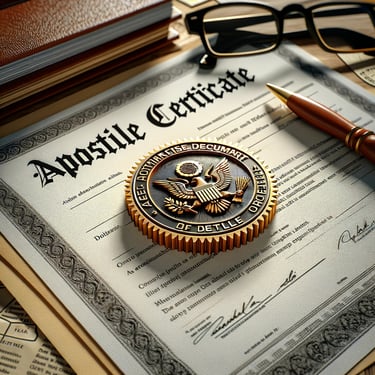
The Short Answer An apostille is an official certificate that authenticates the origin of a public document so it can be recognized in another country. post description.
Board of Directors
7/24/20265 min read
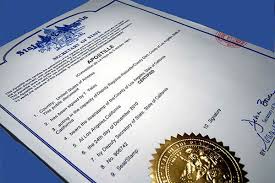
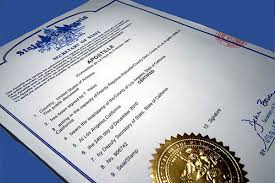
The Apostille. It was created by the 1961 Hague Apostille Convention — formally the Convention of 5 October 1961 Abolishing the Requirement of Legalisation for Foreign Public Documents — an international treaty developed by the Hague Conference on Private International Law (HCCH). Before the Convention, getting a document accepted abroad meant a long, costly chain of certifications through multiple embassies and consulates. The apostille replaced all of that with a single certificate (HCCH).
In short: instead of chasing down diplomats in multiple countries, one stamp from a designated authority does the job.
What an Apostille Actually Certifies
Here's the key thing to understand — an apostille confirms where a document came from, not what it says.
Specifically, it certifies:
The authenticity of the signature on the document
The capacity in which the signer acted (e.g., that they were an official notary or registrar)
The identity of the seal or stamp the document bears
That's it. As the HCCH's own materials stress, "an Apostille does not certify the content of the public document to which it relates" — and since 2009 authorities have been encouraged to print that disclaimer right on the certificate itself (HCCH Apostille Handbook).
So an apostille proves your birth certificate was genuinely issued by a real government office — but it does not vouch that the information on it is accurate, translate it into another language, or guarantee a foreign institution will accept it.
Common Documents That Get Apostilled
Birth, marriage, and death certificates
Divorce decrees and court orders
Diplomas, transcripts, and academic records
Powers of attorney and affidavits
Corporate documents (articles of incorporation, certificates of good standing)
FBI or police background checks
Notarized documents of many kinds
The Convention applies only to public documents — and whether something counts as a "public document" is determined by the law of the country that issued it (HCCH). Private documents often need to be notarized first so they become notarial acts, which then qualify.
Apostille vs. Legalization: What's the Difference?
Apostille .- When it applies :When both countries are Contracting Parties to the 1961 Apostille Convention
Legalization: When it applies: When the destination country is not a Contracting Party
Process:
Apostille: One certificate from a designated authority, in U.S. is Department of State. Is a FAST and Standardized process.
Legalization:A multi-step chain through embassies or the consulates, and includes foreign affairs in the country of destination. The process is slower and more expensive.
If the country where you'll use the document is a Contracting Party to the 1961 Apostille Convention, an apostille is all you need — meaning no further diplomatic or consular legalization by the destination country is required (HCCH). More than 100 countries are now parties to the Convention (HCCH).
If the destination is not a Contracting Party, you'll usually need traditional consular legalization instead — meaning your document goes through a longer authentication chain at the relevant embassy or consulate.
How to Get an Apostille (U.S. Example)
Before you request one, confirm your destination country is a Contracting Party to the Convention, identify exactly which document the receiving institution wants, and figure out whether your document needs notarization or translation first. A little preparation up front saves a lot of back-and-forth later.
The process varies by country, but in the United States it generally looks like this:
Confirm the destination country is a Contracting Party. If it is, you need an apostille; if not, you need legalization (U.S. Department of State).
Start with an original or certified copy. Photocopies won't work — the document must bear original seals and signatures and include a date of issuance (U.S. Department of State).
Notarize if needed. Private documents usually need notarization first. (Note: don't notarize the original of a vital record — instead, get a certified copy.)
Submit to the right authority. In the U.S., documents issued by a state (such as birth certificates) generally go to the competent authority in the issuing state, often the Secretary of State's office. Documents issued by a federal agency (such as an FBI background check) go through the U.S. Department of State's Office of Authentications(HCCH). Federal court documents may follow their own certification route.
Translate if required. If the destination country needs the document translated, use a professional translator (certified, if the destination requires it) — and have the translation notarized, not the original document (U.S. Department of State).
Additional Requirements .- Some states, like New York, New Jersey, North Carolina, Texas, and California have additional requirements for the Apostille of some documents, especially regarding Civil Records. We recommend checking with the state where the documents were issued about what requirements they demand for an Apostille.
What Is an Apostille — and When Do You Actually Need One?
If you've ever been asked to "get an apostille" on a birth certificate, diploma, or power of attorney, you probably had two questions: What is that? and Why do I need it?
This guide breaks it down in plain English — what an apostille is, what it does (and doesn't do), and the everyday situations where you'll be asked for one.
When Do You Need One?
An apostille is only relevant when a document issued in one country needs to be used in another country — and both countries are Contracting Parties to the 1961 Apostille Convention. You'll never need one to use a document inside the country that issued it (HCCH).
The situations below are the most common reasons people request an apostille, though exact frequency varies by country and circumstance:
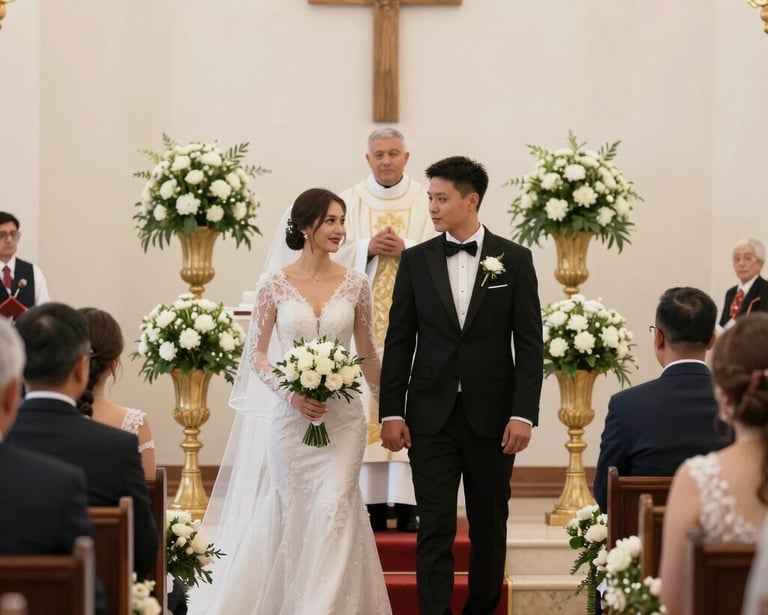
1. Getting married or divorced abroad
Many countries require foreign nationals to present apostilled birth certificates, single-status affidavits, or divorce decrees before allowing a marriage.
2. Moving abroad — visas, residency, or dual citizenship
Immigration authorities frequently ask for apostilled police background checks, marriage certificates, or proof of identity documents as part of residency or citizenship applications.
3. Studying or working in another country
Universities and employers often require apostilled diplomas, transcripts, or professional licenses to verify foreign credentials.
4. Doing business internationally
Setting up a company abroad, signing cross-border contracts, or opening a foreign bank account may call for apostilled powers of attorney, articles of incorporation, or corporate resolutions.
5. Adoption and family legal matters
International adoptions involve extensive apostilled documentation — court orders, home studies, financial statements, and more.
6. Real estate, inheritance, and court matters overseas
Buying property abroad, claiming an inheritance, or participating in foreign legal proceedings can require apostilled deeds, wills, probate documents, or court judgments.




Things to Keep in Mind
An apostille doesn't expire — once validly issued, it remains in effect as long as it stays identifiable and attached to the document (HCCH). However, the underlying document (like a background check) may have its own freshness requirement from the receiving country.
An apostille can't fix a defective document. If the original is incomplete or improperly issued, the apostille won't cure that.
Always check the destination's rules first. Some institutions want specific document types, translations, or recent issuance dates — requirements that exist on top of the apostille itself.
The process is complex, and the request can contain text formalities and requirements that vary from state to state. Fortunately, there are companies like INTEGRAMERICA.ORG that can take care of this procedure quickly, safely, responsibly, and affordably, and since 2004 they have been providing help with the Apostille process in all fifty states of the United States.