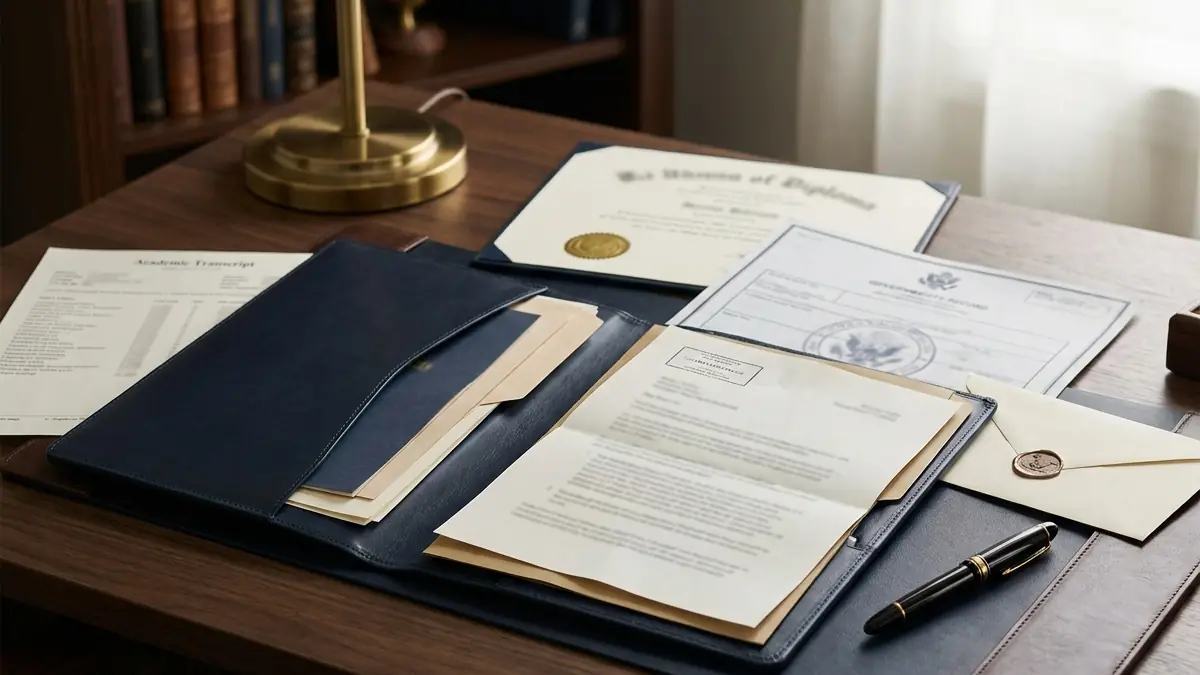
Documents that usually travel alongside the diploma and transcript
While this guide focuses on the apostille, it's worth remembering that a diploma and transcript almost never travel alone in an admission file. Depending on the program and university, the complete package can also include a letter of motivation, an academic CV, proof of proficiency in the language of instruction (German or English, depending on the program), evidence of financial means for the student visa, and in some cases valid health insurance in Germany. None of these additional documents necessarily follows the same apostille route as the diploma: each may have its own format requirement, and it's worth checking them separately against the university's or uni-assist's checklist rather than assuming "everything gets apostilled the same way."
Plan with enough lead time
Assembling a complete academic file for Germany usually involves several sequential steps: contacting the registrar, obtaining the certified copy, processing the state apostille, arranging the authorized translation, and finally submitting everything to uni-assist or the university. Each step depends on the one before it, and response times from university offices, state authorities and translators vary and aren't guaranteed. That's why it's worth starting the process as far ahead of the application deadline as possible, rather than waiting for a conditional admission response before moving the first document.
Illustrative example: an applicant obtains the apostille on their transcript, but sends it to a translator who isn't on the list of authorized translators uni-assist recognizes for their country. The result is that the translation, not the apostille, has to be redone before the file is considered complete. Verifying the authorized-translator requirements before commissioning the translation avoids this kind of rework.