
Serving the U.S. and clients worldwide since 2004
Portugal

Portugal D7 visa for retirees: documents and apostilles
Practical guide · 9 min read · Published July 30, 2026

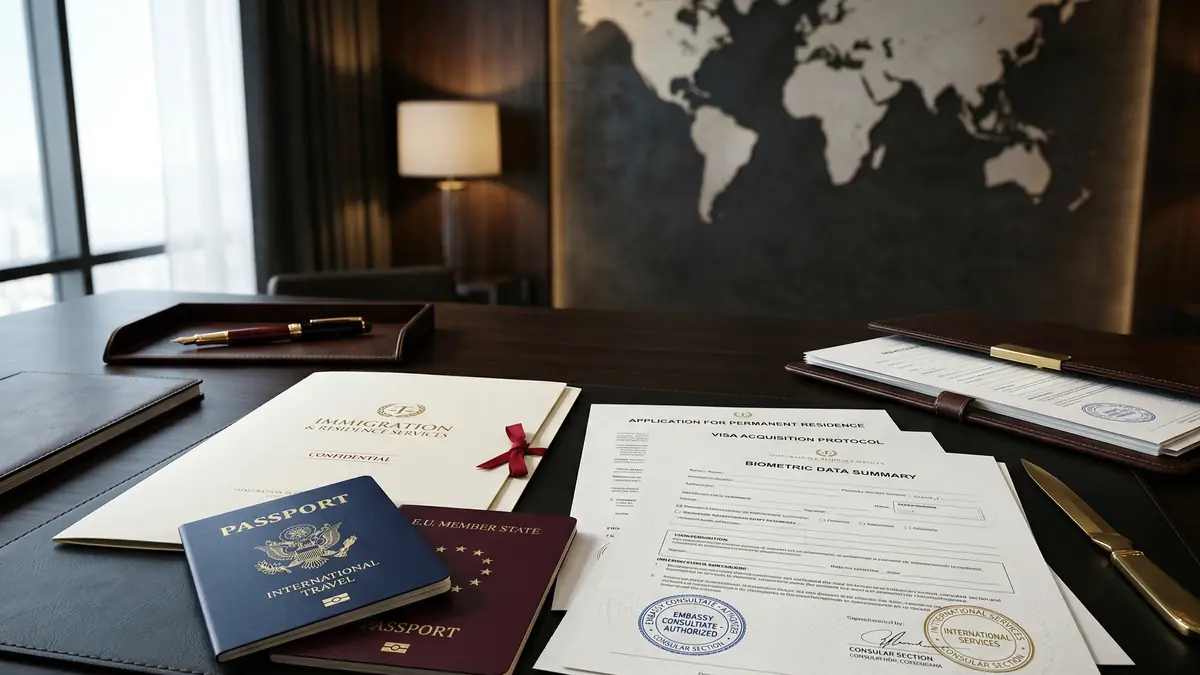
Immigration folder with passports and application forms
Illustrative image; it does not represent an official document.

The D7 visa is often used by retirees and by people who live on pensions, investment income or other passive earnings and want to settle in Portugal without depending on a local employer. The real challenge isn't apostilling everything, it's identifying exactly what the current checklist at your VFS center requires, preparing each document through the correct authority, and sequencing the work so nothing expires before your appointment.

Quick document map

Before the full detail, here's the general picture of where each document goes:

  • FBI background check: federal apostille, issued by the U.S. Department of State.
  • U.S. birth or marriage certificate: state apostille, issued by the state that issued the document.
  • Bank and pension letters: review the checklist before authenticating anything; many don't need an apostille.
  • Translations: only the ones explicitly required by the competent VFS or consular checklist.

Start with the current checklist, not a generic one

Portugal routes most national-visa applications filed from the United States through VFS Global, which acts as the submission center for the relevant Portuguese Embassy or consulate based on your jurisdiction. Before ordering a single certificate, confirm the correct category (D7) and the jurisdiction tied to where you reside in the U.S., because each center can publish minor variations in the checklist, the application form, and how submissions are accepted.

Checklists, forms and appointment procedures can change from one quarter to the next, and any article published online (including this one) cannot replace the version in effect on the day you apply. Treat outside summaries as a general map and confirm the fine print with the official source before you start requesting original documents.

Documents that typically make up the file

The exact detail varies by jurisdiction, but a D7 file built around retirement or passive income tends to fall into these groups:

  • Identity and travel: valid passport, application form, passport-style photos and evidence of current U.S. residence.
  • Proof of income: pension, Social Security, investment income, rental income or another regular, sustainable passive-income source, usually backed by statements or letters from the paying institution.
  • Accommodation in Portugal: a lease, a deed of purchase, or a reservation letter, depending on your situation.
  • Financial means and insurance: evidence of available funds and a travel or health insurance policy meeting the required minimums.
  • Criminal record checks: a background check from the country or countries where you've resided, with whatever authentication the consulate requires.
  • Family civil documents: when a spouse or child is included in the application, U.S. birth or marriage certificates may be required to establish the family relationship. These are normally state documents and, when an apostille is required, it comes from the competent authority in the issuing state.

For current Portugal national-visa applications filed through VFS in the United States, the police clearance certificate is generally required to have been issued less than 90 days before submission and to carry the Hague Apostille. Because VFS and consular instructions can change, always verify the checklist for your jurisdiction before ordering the certificate.

The exact list, minimum income amounts and accepted formats must be confirmed directly with VFS Global or the competent Portuguese Embassy/consulate. No figure published in a blog post should be treated as final for your case.

What may need an apostille, and what doesn't

Not every document in the file follows the same authentication route, and that's where many applicants lose time:

  • FBI background check: an FBI Identity History Summary is a federal document. When Portugal requires it apostilled, the apostille is obtained through the U.S. Department of State Office of Authentications, not through a state Secretary of State.
  • U.S. birth or marriage certificate: normally a state-level document, apostilled by the issuing state's authority (often the Secretary of State or an equivalent office).
  • Bank letters, pension statements or private declarations: should not be apostilled by reflex. First confirm whether the receiving authority wants notarization, an apostille on the notarial acknowledgment, translation, or simply the original or a bank-certified copy. Apostilling a document that never required it doesn't speed anything up and can create confusion when the file is submitted.

A common example: an applicant apostilles their birth certificate correctly in the issuing state, but also tries to apostille a bank letter confirming their balance. A bank letter or pension statement may require no authentication, notarization, or another form of certification depending on the exact checklist. Do not apostille it automatically just because it is part of a visa application.

How the apostille actually works

An apostille doesn't certify that the content of a document is true; it certifies the origin of a signature, the capacity of the signer, and, where relevant, the seal on the document. For a U.S. civil record, the apostille is generally issued on an eligible certified copy from the state of issuance; whether the record must also be recently issued depends on the receiving authority's requirements, not on a universal rule. For an FBI check, the equivalent process happens at the federal level. Because both the United States and Portugal are parties to the Hague Apostille Convention, eligible U.S. public documents for use in Portugal generally use an apostille rather than Portuguese consular legalization, but the receiving authority still has the final say on whether the format, validity window and translation meet its rules.

Sequencing the file to avoid expired documents

Many applicants gather documents in the wrong order and end up with an expired certificate right before their appointment. A safer sequence looks like this:

  1. Identify your VFS center and jurisdiction, and download the current checklist directly from its site.
  2. Mark which documents on that checklist carry an age limit (criminal records and recent financial statements often do) and which don't.
  3. Order the hardest-to-replace records first, such as older civil records or an FBI check with a longer processing window.
  4. Complete the correct certifications and apostilles for each document, confirming the issuing state or federal level as appropriate.
  5. Translate only what the checklist explicitly requires, using a translator format Portugal accepts.
  6. Do a final review of the complete file without dismantling, re-stapling or altering already-apostilled documents, since the apostille is usually physically attached to the certified document.

Don't confuse the D7 with other visa categories

Portugal maintains separate national-visa categories for remote work (often called the digital nomad visa), investment, entrepreneurial activity, salaried employment and other purposes. The D7 is commonly used by applicants relying on stable personal income such as pensions, rental income or investments. Applicants whose principal income comes from active remote work should verify whether another national-visa category is more appropriate for their situation before preparing apostilled documents, since a different category's file may require different pieces entirely.

Common mistakes that slow down the file

  • Apostilling a document before confirming whether the checklist wants it apostilled, notarized, or simply in original form.
  • Using an older certified copy when the authority requires one issued within the last several months.
  • Submitting translations of documents the current VFS or consular checklist never required translated, or using a translator format other than the one the competent office specifies.
  • Dismantling or hole-punching an apostilled document to file it, which can invalidate the physical certification.
  • Assuming a family member's exact process will apply identically to yours, when jurisdictions and issue dates can differ.
FAQ

Frequently asked questions

Have more questions? Send us your specific case and we'll walk through it with you.

Should bank statements be apostilled?+
Don't assume so. Follow the exact current format the checklist asks for; an unnecessary apostille adds time and cost without satisfying what's often a much simpler requirement: a recent bank letter or a basic notarization.
Does Florida apostille every document?+
No. Each document follows the location and level of its eligible signature: a New York certificate is apostilled in New York, an FBI check is apostilled federally, and so on.
Does an apostille guarantee the visa?+
No. It only authenticates the origin of a public signature or seal on the document; it does not evaluate or guarantee approval of the visa application, which is a decision that belongs exclusively to the consular authority.
Can I apostille documents months in advance?+
It depends on the document type and whether the checklist sets a maximum validity window. Criminal records and certain financial statements tend to have shorter validity windows than a civil certificate.
What if my birth certificate is from a state I no longer live in?+
The apostille is issued by the state where the original record was created or where the certified copy was issued, not the state where you currently live.
Do I need to translate every apostilled document?+
Only the ones the checklist requires. Confirm whether Portugal accepts the document in English or requires translation into Portuguese, and what kind of translator it recognizes.

Informational content only. Integramerica is not a law firm and does not provide legal advice. Requirements and final acceptance depend on the receiving authority. Integramerica provides document preparation, apostille, legalization, translation, and attorney referrals when appropriate; it does not determine visa eligibility. Official requirements last reviewed: August 2026.

Contact

Want to confirm the route for your documents?

Send us the document type, issuing state or agency and destination country. We review the document route before you incur unnecessary expense.

Request your document review

Examples: Florida, New York, FBI, U.S. Department of State.
Call us

Please do not include Social Security numbers, financial account information or other highly sensitive personal data.

WhatsAppCallEmail