
Apostille or Consular Legalization: Which One Does Your Document Need?
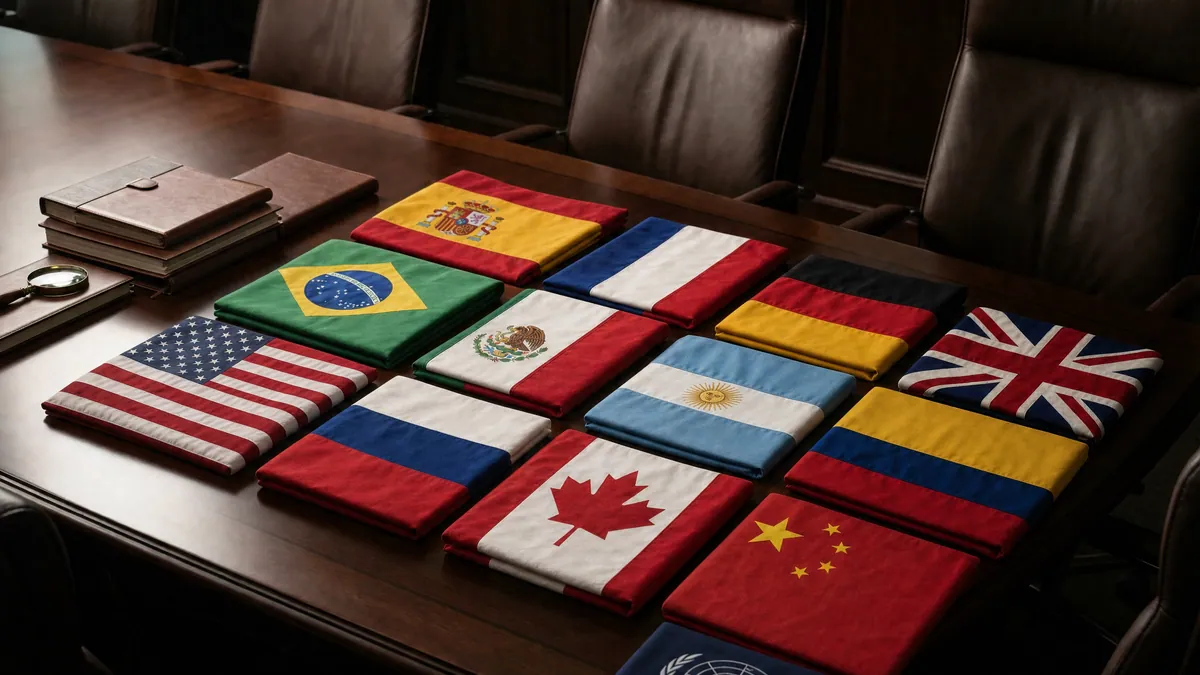
Apostille and consular legalization are two different ways of authenticating documents for international use. The correct route depends primarily on the destination country, but also on the type of document, the authority that issued or notarized it, and the requirements of the receiving institution.
If both the United States and the destination country are parties to the Hague Apostille Convention, an eligible U.S. public document generally uses an apostille. If the destination country is not covered by the Convention, the document may require a longer authentication and consular-legalization process.
In short: check the destination country first, then the type of document and the authority that issued it. All three together determine the correct route, not just the first one.
Apostille vs. legalization: quick comparison
This table summarizes the main differences. Neither option alone guarantees that the receiving authority will accept the document; both also depend on the type of document and the specific requirements of the process.
| Apostille | Consular legalization | |
|---|---|---|
| Used for | Hague Apostille Convention countries | Countries outside the applicable Apostille Convention route |
| Purpose | Authenticates the origin of a public signature or seal | Authenticates the document through a longer chain |
| Authority | State or federal competent authority | May involve state, federal and foreign consular authorities |
| Consulate required? | Generally no | Often yes |
| Translation automatically included? | No | No |
| Guarantees acceptance? | No | No |
What is an apostille?
An apostille is a certificate issued by a designated government authority that authenticates the origin of a public signature or seal on a document. It does not verify that the content of the document is true, and it does not guarantee that the receiving authority will accept it; it certifies that the signature, seal and official capacity of the person who issued or notarized the document are genuine. It is used between countries that participate in the 1961 Hague Apostille Convention, and it replaces the longer chain of consular authentications that existed before that Convention connected member countries.
What is consular legalization?
Consular legalization is used when the destination country does not participate in the applicable Apostille Convention route. Instead of a single certificate, the document goes through a chain of authentications that may include the state that issued or notarized it, a federal authority and, finally, the consulate or embassy of the destination country in the United States. Each link in the chain authenticates the one before it, which is why the process usually takes more time and more steps than an apostille.
Why the destination country matters
The first factor that determines the route is the country where the document will be presented. If both the United States and the destination country are parties to the Apostille Convention, an eligible public document generally only needs an apostille. If the destination country does not participate in the Convention, or if the Convention does not apply to that particular bilateral relationship, the document generally needs consular legalization instead. The list of member countries changes over time, so it is worth confirming current participation before starting any process, rather than assuming a country still belongs, or does not belong, to the Convention because that was the case a few years ago.
Why the type of document matters too
The destination country is not the only factor. The type of document and the authority that issued or notarized it determine which office must authenticate it, and getting this wrong is one of the most common causes of rejection and delay.
State-issued documents
Birth certificates, marriage certificates, divorce records, Certificates of Status and certain certified corporate records are state-issued documents. These generally follow the authentication route of the state that issued the document, regardless of where the person currently resides.
Notarized private documents
Powers of attorney, affidavits, minor travel consent forms and certain private corporate resolutions are notarized documents. The competent authority usually depends on the state whose notary performed the notarization, not the state where the signer lives.
Federal documents
FBI Identity History Summaries, certain federal agency documents and eligible certified federal records follow a federal authentication route rather than a state route, regardless of the destination country.
Three practical examples
- Birth certificate for Spain: a Florida birth certificate intended for Spain generally follows Florida's apostille process, because both the United States and Spain participate in the Hague Apostille Convention.
- Power of attorney for a non-Hague destination: a power of attorney notarized in Florida for use in a country outside the applicable Apostille Convention route may require Florida authentication followed by additional federal and consular steps, depending on that country's requirements.
- FBI background check: an FBI background check is a federal document. Even if the destination accepts apostilles, it does not go to the Florida Secretary of State; its apostille route is federal.
Does an apostille include translation?
No. An apostille authenticates the origin of a public signature or seal; it does not translate the document. The receiving authority may require: no translation, a certified translation, a sworn translation, translation by a locally authorized translator, or translation of the apostille certificate itself. Always confirm who is permitted to translate before ordering the translation, because a translator valid for one country may not be valid for another.
Common mistakes
- Requesting a state apostille for a federal document.
- Sending the document to the state where the client lives instead of the state that issued or notarized it.
- Assuming every country accepts apostilles.
- Obtaining consular legalization unnecessarily for a document from a Hague Apostille Convention country.
- Not checking whether the receiving authority requires a recent copy.
- Translating the document before confirming the required translation format.
- Assuming an apostille guarantees acceptance of the document.
- Using a simple photocopy where a certified copy is required.
Frequently asked questions
Have more questions? Write to us with your specific case and we will review it with you.
Is an apostille the same as legalization?+
Does every document going to a Hague country need an apostille?+
How do I know whether the destination country accepts apostilles?+
Who issues the apostille in the United States?+
Does a U.S. Department of State apostille work for every document?+
Do I still need the embassy or consulate after an apostille?+
What happens if the country is not part of the Hague Apostille Convention?+
Can one apostille be used for multiple countries?+
Does an apostille expire?+
Can Integramerica tell me which process applies?+
Send us: a photo or scan of the document, the state or federal agency that issued it, the destination country, and the authority that will receive it. We will review the likely document-authentication route before you spend money on unnecessary steps.
Informational content. Integramerica is not a law firm and does not provide legal advice; requirements vary by issuing authority and destination country. Official requirements last reviewed: August 2026.
Apostille or legalization? We will confirm it
Tell us the destination country and we will review which procedure your document needs.