
What Is an Apostille and When Do You Need One?
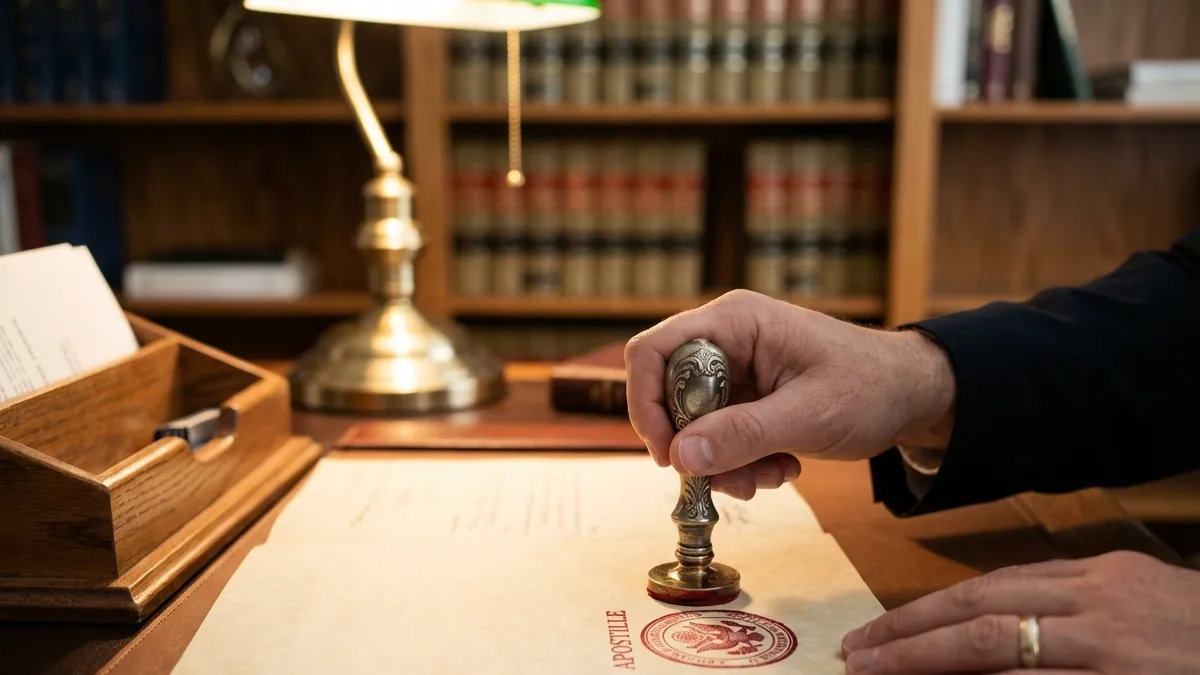
An apostille is a certificate issued by a designated government authority that authenticates a public document for presentation in another country. It does not change the contents of the document or certify that the statements inside it are true. It verifies the signature, the official capacity of the person who signed it, and, when applicable, the seal or stamp on it.
Integramerica handles state and federal apostilles for clients throughout the United States and abroad. Send us a photo or scan of your document and the country where it will be used. The initial review is free.
When is an apostille required?
An apostille is typically required when a document issued in the United States needs to be presented to a government agency, court, university, employer, bank, notary or other institution abroad. It replaces the longer chain of embassy and consular authentication that countries relied on before the Hague Apostille Convention connected them.
An apostille isn't automatically required for every international use of a document, though. Depending on the receiving institution, you may instead find that the document is accepted as-is, that consular legalization applies instead, that a more recently issued certified copy is needed, or that a certified translation is required alongside the apostille. Whenever possible, get the receiving authority's written requirements before you start.
Which countries use apostilles?
Apostilles are generally used when both the country that issued the document and the country where it will be presented participate in the 1961 Hague Apostille Convention, and the Convention is in force between them. If the destination country does not participate, the document generally needs consular legalization instead of an apostille.
The exact route depends on several things beyond just Convention membership: where the document was issued, whether it's a state or federal document, the type of document, and the specific requirements of the receiving institution. Confirm current participation and requirements before submitting anything, since they can change.
Which documents can be apostilled?
Many public documents can be apostilled. Certain privately signed documents (such as powers of attorney, affidavits and authorizations) can also qualify once they have been properly notarized. Common examples include:
- Birth, marriage, divorce and death certificates
- Powers of attorney and sworn affidavits
- Diplomas, degrees and academic transcripts
- FBI and state criminal background checks
- Corporate documents and certificates of good standing
- Certificates of origin and other export documents
The exact version required matters as much as the document type. A birth certificate usually needs to be an eligible certified copy, not a plain photocopy; many states restrict notaries from certifying copies of certain vital records in the first place. A diploma may need the registrar's notarized signature rather than the diploma itself. Confirm the required format with the issuing or receiving authority before you order anything.
Is an apostille the same as notarization?
No. They are two different steps. A notary verifies a signature, administers an oath, or certifies a copy, depending on what state law allows. An apostille is issued afterward by a designated government authority, and it authenticates the notary's own signature and official capacity, not the content of the underlying document.
Some privately signed documents need to be notarized first, so there is a notary's signature for the apostille to authenticate. Documents already issued directly by a government office (like a certified birth certificate) usually should not be notarized again; the apostille authenticates the issuing office's signature instead. A notary public does not issue apostilles.
Who issues apostilles in the United States?
The correct office depends on whether the document is a state document or a federal one.
State-issued documents, and documents notarized under state law, are apostilled by the designated authority in that state, usually the Secretary of State or an equivalent office. A document notarized in Florida generally follows Florida's process; one notarized in New York follows New York's.
Certain federal documents (including FBI background checks and other records issued by federal agencies) are instead handled through the U.S. Department of State. Sending a state document to the federal office, or a federal document to a state office, is one of the most common causes of rejection and delay.
What an apostille does NOT do
An apostille does not certify that the statements inside the document are true, validate its legal effect, or guarantee that the receiving authority will accept it. The recipient may still require a more recent issue date, a specific type of certified copy, a certified translation, or other supporting documents. Whether a document is apostille-eligible and whether it's the right document for what you're trying to do aren't always the same question; it's worth confirming both.
Does an apostille expire?
The apostille certificate itself generally does not carry a universal expiration date. What can effectively "expire," in practice, is the underlying document's usefulness for a specific purpose: many consulates, courts and universities want a birth certificate, background check or certificate of status issued within a recent window, sometimes as short as three to six months. Confirm the receiving authority's freshness requirement before you order the document or the apostille, not after.
Does an apostille need to be translated?
An apostille and a translation do two different jobs: the apostille authenticates the signature and authority behind the document, while a translation lets the receiving institution actually read it. Depending on the country and the procedure, you may need a certified or sworn translation of the underlying document, of the apostille certificate itself, or both, and whether you translate first or apostille first varies by destination. Confirm the required order with the receiving institution before paying for either service.
Frequently asked questions
Have more questions? Send us your specific case and we'll walk through it with you.
Can a photocopy be apostilled?+
What's the difference between a state and a federal apostille?+
Do I need to send the original document?+
How long does the process take?+
Can Integramerica complete the apostille for me, or just explain the process?+
Informational content. Integramerica is not a law firm and does not provide legal advice; requirements vary by issuing authority and destination country. Official requirements last reviewed: August 2026.
Need to apostille a document?
Send us a copy and the country where it will be used. The initial review is free.