Who issues a Certificate of Free Sale in the U.S.?
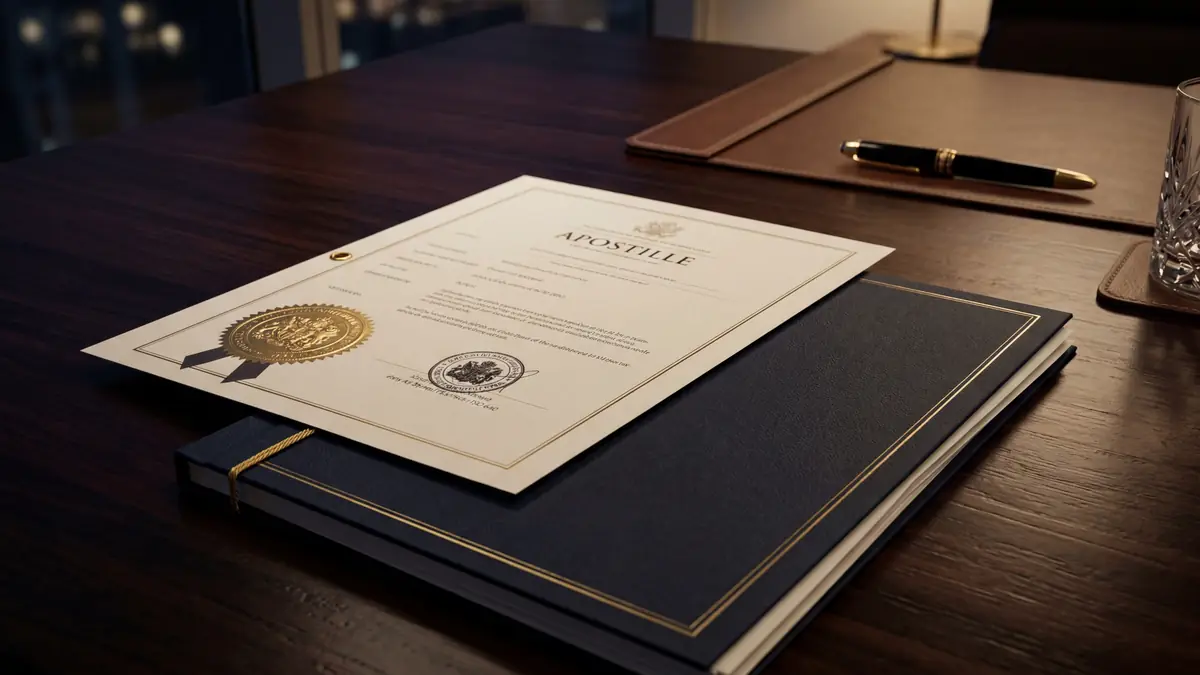
"Certificate of Free Sale" is not the name of a single certificate used for every product in the United States. Depending on the product category and what the importing country requires, the correct document may be a Certificate of Free Sale, a Certificate to a Foreign Government, a Certificate of Exportability, a Certificate for Cosmetics, or another export certificate. The issuing authority may be federal, state, or another competent entity. Before requesting an apostille or legalization, you first need to identify the exact product and the specific certificate the foreign authority requires.
The correct authority depends on the product. Dietary supplements, medical foods, and foods for special dietary use: the FDA may issue a Certificate of Free Sale. Conventional foods, food additives, food-contact substances, and infant formula: the FDA uses other certificates, such as a Certificate to a Foreign Government or a Certificate of Exportability. Medical devices: the FDA, through the CDRH, uses specific certificates, such as a Certificate to Foreign Government and a Certificate of Exportability. Cosmetics: the FDA issues a Certificate for Cosmetics, not necessarily a Certificate of Free Sale. Other products: a state authority or another competent entity may be involved. The exact document must match what the receiving country requested.
Food and dietary supplements
The FDA's food program issues different certificates depending on the commodity. For dietary supplements, medical foods, and foods for special dietary use, the FDA may issue a Certificate of Free Sale (COFS). For conventional food, seafood, food additives, food-contact substances, and infant formula, the FDA instead uses a Certificate to a Foreign Government (CFG) or a Certificate of Exportability (COE). The exporter should confirm with its foreign regulator which certificate is actually required, rather than assuming every product falls under the name "Certificate of Free Sale."
Medical devices
Medical devices have their own export-certificate system within the FDA. Depending on the device's regulatory and marketing status, the FDA may issue a Certificate to Foreign Government, a Certificate of Exportability under section 801(e)(1), a Certificate of Exportability under section 802, or a Non-Clinical Research Use Only Certificate. Since 2024, the FDA's medical-device export certificates are issued electronically as downloadable PDFs and can be validated online.
Cosmetics
For cosmetics, the FDA issues a specific export certificate, the Certificate for Cosmetics, which is not the same as a Certificate of Free Sale. The FDA is not legally required to issue cosmetics certificates, and it does not issue them for cosmetics manufactured outside the United States or for raw or bulk materials.
State-issued certificates
For some products, the required export certificate may come from a state Department of Agriculture, a state Department of Health, or another state authority, depending on the product and what the destination country requires. Because these cases vary widely, confirm with the receiving authority whether it accepts a state-issued certificate before requesting one.
In some transactions, a foreign authority may accept a manufacturer declaration or another privately issued export statement, but this should not be treated as equivalent to an FDA or state-issued Certificate of Free Sale unless the receiving authority expressly allows it.
Electronic verification vs. apostille
Does an FDA electronic certificate still need an apostille? Not always. The FDA currently issues many export certificates electronically and provides online verification tools. Some foreign authorities accept this electronic verification directly. Others still require an apostille or additional authentication.
For medical-device export certificates, the FDA recommends the FURLS Export Certificate Validator as the primary authentication method, although electronic certificates can still be apostilled when needed. For food export certificates, the FDA provides online verification for the Certificate to a Foreign Government, the Certificate of Exportability, and the Certificate of Free Sale.
After issuance, don't assume the certificate needs an apostille. Some destination authorities accept the original electronic or verifiable certificate directly; others request an apostille, additional authentication, consular legalization, or translation.
How to identify the right certificate
Before applying, ask the foreign authority:
- The exact certificate name.
- The product category.
- Which U.S. issuing authority is required.
- Whether electronic FDA verification is accepted.
- Whether an apostille is required.
- Whether consular legalization is required.
- Whether translation is required.
- The required validity period.
- Whether one certificate can cover several products or shipments.
Six steps to get and authenticate the right certificate
- Identify the product category (food, supplement, cosmetic, device, veterinary product, etc.).
- Obtain the foreign requirement: ask the importer or regulator for the exact certificate name.
- Identify the issuing authority: an FDA center, a state agency, or another competent authority.
- Apply for the correct certificate; don't order "a Certificate of Free Sale" just because that's the informal phrase your commercial team is using.
- Confirm authentication requirements: electronic verification, apostille, legalization, or none.
- Arrange translation and delivery, only in the form the receiving authority requires.
Practical examples
Dietary supplement. A foreign health authority requests a Certificate of Free Sale for a U.S. dietary supplement. The FDA may issue the COFS through its food export-certification process. The exporter should confirm whether the authority accepts FDA electronic verification or additionally requires an apostille.
Medical device. A foreign regulator requests proof that a medical device is legally marketed in the U.S. The relevant certificate may be a Certificate to Foreign Government rather than a Certificate of Free Sale. The FDA, through the CDRH, currently issues these certificates electronically.
Conventional food. A manufacturer exporting conventional food may need a Certificate to a Foreign Government rather than a Certificate of Free Sale.
Common mistakes
- Asking the FDA for the wrong certificate name.
- Assuming every product uses a Certificate of Free Sale.
- Treating medical devices like food products.
- Apostilling an electronically verifiable FDA certificate without first confirming an apostille is actually required.
- Assuming an FDA certificate guarantees foreign registration.
- Using a manufacturer declaration when the regulator expects a government certificate.
- Applying for authentication before the certificate has been correctly issued.
- Confusing a Certificate of Free Sale with a Certificate of Origin.
- Confusing a Certificate of Free Sale with a Certificate to Foreign Government.
- Not checking document validity or expiration requirements.
Frequently asked questions
Have more questions? Write to us with your specific case and we will review it with you.
Does the FDA issue every Certificate of Free Sale?+
Which products can receive an FDA Certificate of Free Sale?+
Does the FDA issue a Certificate of Free Sale for conventional food?+
Does the FDA issue a Certificate of Free Sale for medical devices?+
What certificate is used for cosmetics?+
Does every certificate need an apostille?+
Can an electronic FDA certificate be apostilled?+
Can foreign authorities verify FDA certificates online?+
Is a Certificate of Free Sale the same as a Certificate to Foreign Government?+
Is a Certificate of Exportability the same as a Certificate of Free Sale?+
Does Integramerica decide which FDA certificate my product qualifies for?+
Does an apostille guarantee product registration abroad?+
Integramerica does not determine whether a product qualifies for a Certificate of Free Sale, a Certificate to a Foreign Government, or another FDA certificate, and it does not determine foreign product-registration requirements. An apostille authenticates the certificate; it does not guarantee that the product will be approved or registered by the destination country's regulator.
Informational content. Integramerica is not a law firm and does not provide legal or regulatory advice; requirements vary by issuing authority, product, and destination country. Official requirements last reviewed: August 2026. Integramerica coordinates document authentication and translation; it does not determine customs classification, product registration, FDA eligibility, origin qualification, or export licensing.
Need to authenticate a Certificate of Free Sale or another export certificate?
Tell us the product, the destination country, and the exact certificate name requested by the importer or regulator. We'll review which authority typically issues that type of certificate and which authentication route may apply.